
Expertise · Brand & Experience Design

Coherent brands. Usable experiences.

We design brand identities, interfaces and services as one experience, so what people see, read and use feels consistent and works in practice.

When it’s relevant

  • A growing organization wants a brand and digital presence that match its ambition.
  • People move across channels and the experience should feel like one service.
  • A product needs a clear interface and a design system the team can extend.
  • A service is being redesigned around the people who use it.

What we contribute

  • Brand identity
  • Brand systems
  • Customer experience
  • UX design
  • UI design
  • Information architecture
  • Service design
  • Design systems
  • Creative direction

How we approach it

Define &ExploreDesign &DevelopOptimizenew evidence,changing needs
  1. Define & ExploreWe learn how the brand is seen today and how people move through the experience.
  2. Design & DevelopWe design identity, interfaces and service moments together, prototype them and refine them with the people who will use them.
  3. OptimizeWe extend the system as needs grow and look for where the experience can become clearer.
  4. Then the loop starts again at Define & Explore.

Common questions

What is the difference between UX and UI design?

UX design is about how a product or service works: what people need, the steps they take and where they get stuck. UI design is how that experience looks on screen: layout, typography, colour and components. We design both together rather than splitting them between teams, because people experience them as one.

What stages does a UX/UI project go through?

Every project follows the same loop. In Define & Explore we understand the goals, the users and where things stand today. In Design & Develop we design and test the flows, interfaces and design system step by step. In Optimize we watch how the experience is used and decide what comes next. The details are on our approach page.

Do you take the design through to development?

Yes. Design and engineering work side by side in the same team: we build interfaces through to front-end code and, where needed, take on the back end, APIs and integrations as well. What was designed stays the same in what gets built. See Digital Products & Platforms.

Why does a design system matter?

A design system brings a product’s building blocks, from colours to components, and the rules for using them into one place. Teams stop remaking the same decisions, new screens stay consistent and accessibility is built in from the start. For organizations with several products or channels, it keeps the experience from drifting apart over time.

What should a large organization look for in a UX/UI design agency?

Work of similar scale and complexity, a process that starts with research, a team that can carry the design into development, experience with accessibility and design systems, and a relationship that can continue after launch. Our answers to these questions are visible in our work: long-running engagements with organizations such as Turkish Airlines and İSKİ. The full list: how to choose a UX/UI design and development agency.

Related work

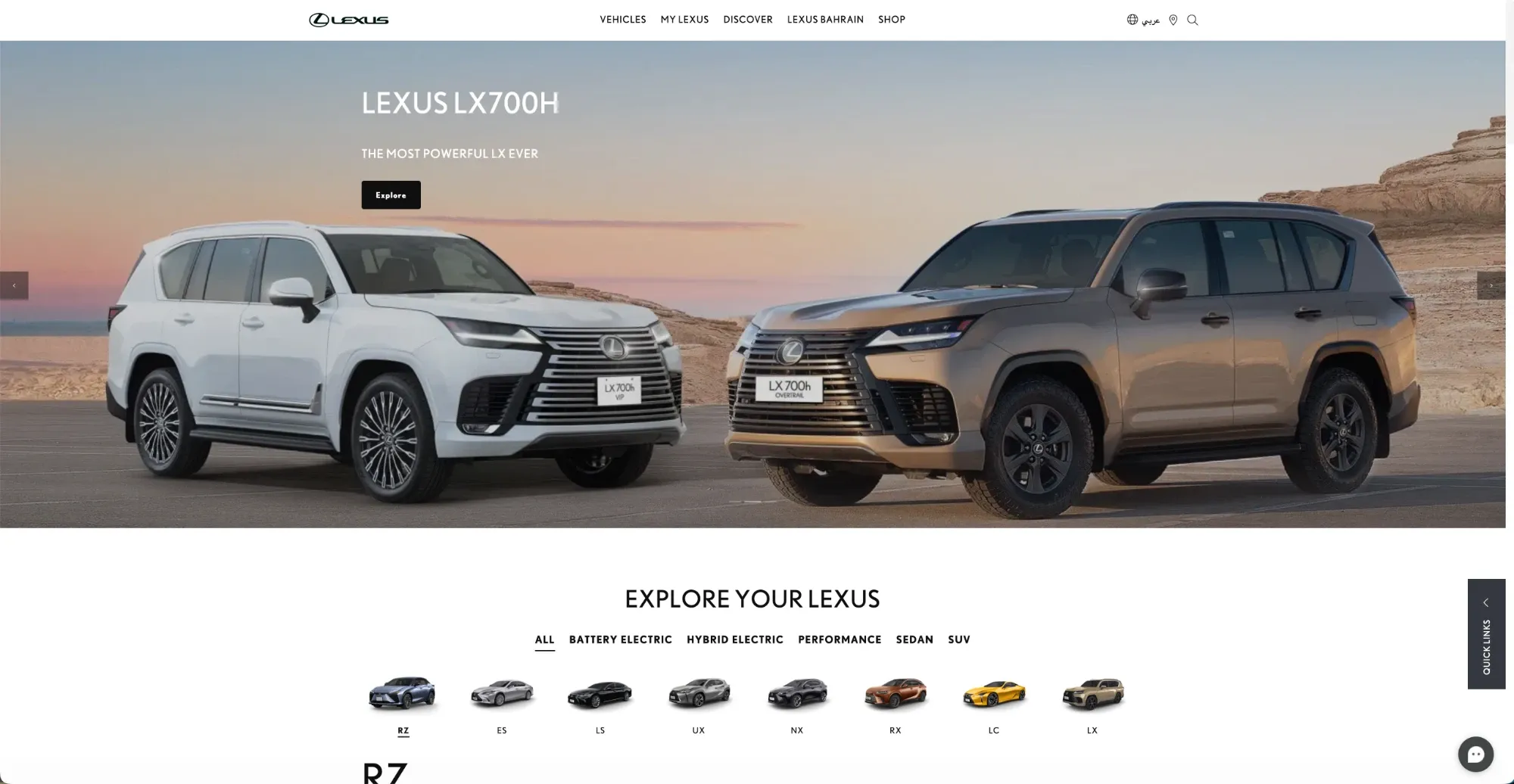
Lexus Bahrain website home page: the LX700h feature and the “Explore your Lexus” model selector

Lexus

Lexus Bahrain website

A bespoke website for Lexus Bahrain, shaped by the brand’s idea of Omotenashi, wholehearted hospitality. Model exploration, content and integrations with external services come together on one platform, in English and Arabic, with the brand’s refined visual language throughout.

Efabrika’s role: Efabrika designed and built the platform end to end: UX, UI, front end, back end and integrations.

  • Research
  • UX/UI Design
  • Development
  • CMS Development
  • Data Integration

Wireum

Efabrika’s own airline platform, in production since 2014. Wireum brings together a white-label live flight map, an operations and financial dashboard, and a flight-data API, used separately or together on the same live data. Airlines use it on websites, apps, kiosks and event screens.

Efabrika’s role: Efabrika owns the platform end to end: brand, product strategy, design, engineering and day-to-day operations.

  • Brand Identity
  • Product Strategy
  • UX/UI Design
  • Development
  • Data Integration
  • Ongoing Support

Ways to engage

Tell us what you’d like your brand and experience to become.

Whether it’s a new identity or a better experience, we’d like to understand where you are now.